
Halo vs Pavé Setting Cost: What You’re Really Paying For and How to Choose Wisely
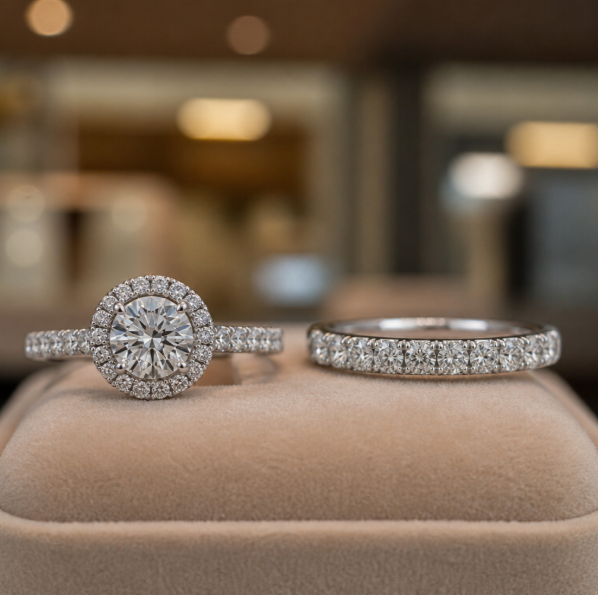
When shopping for an engagement ring or fine jewelry, two of the most popular setting styles consistently rise to the top of the conversation: halo and pavé. Both are celebrated for their brilliance, their ability to amplify the appearance of a center stone, and their undeniable elegance. But while they may seem similar at first glance — both featuring small accent diamonds — the cost structures behind each setting are quite different. Understanding those differences can help you make a smarter, more satisfying purchase.
The Basics: What Are Halo and Pavé Settings?
Before diving into pricing, it helps to understand what each setting actually involves. A halo setting features a ring of small diamonds encircling the center stone, creating a frame that makes the central gem appear larger and more luminous. The halo can be round, cushion-shaped, or geometric, depending on the design. A pavé setting, on the other hand, involves tiny diamonds set closely together along the band or surface of the ring, held in place by small beads or prongs. The result is a surface that appears almost entirely covered in diamonds, giving the ring a continuous sparkle from every angle.
Why Both Settings Are So Popular
Both halo and pavé settings have remained staples in fine jewelry for decades because they offer exceptional visual impact without necessarily requiring a massive center stone. For buyers working within a budget, these settings can make a smaller diamond look significantly more impressive. They also pair beautifully with a wide range of center stone shapes, from round brilliant to oval, pear, and emerald cuts. It’s no surprise that both styles continue to dominate engagement ring trends year after year.
Breaking Down the Cost Differences
The cost of halo vs pavé settings is influenced by several overlapping factors, including the number of accent diamonds used, the complexity of the metalwork, and the skill required to set each stone. Halo settings typically require a precise arrangement of diamonds that must be carefully matched in size and cut to create a uniform frame. This demands more labor and a higher level of craftsmanship. Pavé settings, while also labor-intensive, involve even more individual stones set across a larger surface area, which can drive up both material and labor costs significantly. In general, a pavé band will add more to the overall ring price than a simple halo, though a full pavé halo combination — one of the most popular styles — combines both and represents the higher end of the pricing spectrum.
Metal Choice and Its Impact on Pricing
The metal used in your setting plays a significant role in the final price. Platinum, which is denser and more durable than gold, is often recommended for pavé settings because it holds tiny prongs more securely over time. However, platinum commands a premium price. White gold offers a similar aesthetic at a lower cost, while yellow and rose gold bring their own warmth and character. When comparing halo and pavé costs, always factor in the metal, as the same design in platinum can cost 30 to 50 percent more than in 14-karat gold.
Maintenance and Long-Term Value Considerations
One often-overlooked aspect of the halo vs pavé cost conversation is ongoing maintenance. Pavé settings, because they feature so many small stones held by tiny prongs, are more susceptible to stone loss over time. Regular inspections and occasional re-tipping of prongs are essential to keeping a pavé ring in pristine condition. Halo settings, while also requiring care, tend to be slightly more forgiving since the accent stones are larger and set with more substantial prongs. Over a lifetime of wear, the maintenance costs of a pavé ring can add up, making it important to factor this into your overall budget.
Resale and Appraisal Value
From an investment standpoint, both settings hold their value reasonably well, though the center stone remains the primary driver of resale price. The setting itself — whether halo or pavé — adds to the craftsmanship value but rarely commands a significant premium on the secondary market. If long-term value retention is a priority, focusing on the quality of the center diamond (cut, color, clarity, and carat) will serve you better than choosing one setting style over another purely for investment purposes.
How Setting Style Connects to Personal Style
Beyond cost, your choice between halo and pavé should reflect your personal aesthetic and lifestyle. If you gravitate toward bold, maximalist jewelry and love the idea of a ring that commands attention from across the room, a full pavé or halo pavé combination might be your ideal match. For those who prefer a cleaner, more structured look, a simple halo with a plain or milgrain band offers elegance without excess. Thinking about how your ring will coordinate with your everyday wardrobe is worth considering — much like how creative fashion ideas for everyday wear remind us that personal style is always about harmony between individual pieces.
Emerging Trends in Diamond Settings for 2025 and Beyond
The world of fine jewelry is constantly evolving, and both halo and pavé settings are being reimagined in exciting new ways. Designers are experimenting with asymmetrical halos, colored gemstone accents, and mixed-metal pavé bands that blend yellow gold with white gold for a contemporary two-tone effect. According to insights on bold diamond jewelry trends shaping 2026, statement-making designs that maximize sparkle and visual impact are at the forefront of what consumers are seeking. Both halo and pavé settings are perfectly positioned to meet this demand, offering maximum brilliance in a variety of price ranges.
Leon Diamond: Craftsmanship That Speaks for Itself
For those navigating the halo vs pavé decision, working with a trusted jeweler makes all the difference. Leon Diamond has built a reputation for exceptional craftsmanship, transparent pricing, and a deeply personalized approach to helping clients find the ring that truly reflects their vision. With an extensive collection of both halo and pavé settings crafted in a range of metals and diamond qualities, Leon Diamond offers the expertise and selection needed to make a confident, informed choice. Their team understands that every ring purchase is a meaningful milestone, and they approach each client relationship with that understanding at the forefront.
Making the Right Choice for Your Budget and Lifestyle
Ultimately, the decision between a halo and pavé setting comes down to a combination of budget, aesthetic preference, and practical lifestyle considerations. If you lead an active lifestyle and are concerned about stone loss, a halo setting with a simpler band may offer more peace of mind. If maximum sparkle is your priority and you’re committed to regular maintenance, a full pavé or halo pavé ring will deliver unmatched brilliance. Either way, understanding the true cost breakdown — including materials, labor, and long-term upkeep — ensures that your investment is one you’ll cherish for decades to come.
Conclusion
Choosing between a halo and pavé setting is one of the most exciting decisions in the ring-buying journey. Both styles offer extraordinary beauty and a level of craftsmanship that elevates any center stone. By understanding the cost factors behind each option — from diamond count and metal choice to maintenance requirements and long-term value — you can approach your purchase with clarity and confidence. Whether you’re drawn to the structured elegance of a halo or the seamless shimmer of a pavé band, the right setting is the one that feels unmistakably, perfectly yours.